When temperatures drop sharply in winter, one of the most common and costly plumbing problems is frozen pipes. Water expands as it freezes, and this expansion can generate enough pressure inside a pipe to crack or burst it entirely — leading to significant water damage when the thaw eventually arrives. The good news is that frozen pipes are almost entirely preventable with a few straightforward precautions taken before the cold weather sets in.
How Pipes Freeze and Why They Crack
Water pipes freeze when the surrounding air temperature drops below 0°C for a sustained period. Pipes most at risk are those located in unheated or poorly insulated spaces: external walls, loft spaces, garages, crawl spaces beneath floors, and any pipe that runs near an exterior vent or air gap in the building envelope. Pipes do not always crack at the point where the ice forms; the pressure created by the expanding ice can be transmitted along the pipe, causing a failure at a fitting, a joint, or a thinner section some distance away.
The damage from a burst pipe is typically not from the freezing itself but from the flooding that occurs when the pipe thaws and water rushes through the breach. A single burst pipe can release hundreds of litres of water before it is noticed, causing damage to ceilings, walls, flooring, and possessions.
Pipes Most at Risk — Location Guide
| Location | Risk Level | Recommended Action |
|---|---|---|
| Outdoor garden taps | Very High | Drain and fit an insulating cover before first frost |
| Loft / attic pipes | High | Insulate pipes; ensure loft hatch is draught-proofed |
| Unheated garage pipes | High | Foam lagging; consider re-routing if possible |
| External wall pipes | Medium–High | Foam lagging; keep cabinet doors open in extreme cold |
| Under-sink pipes (exterior walls) | Medium | Open cabinet doors on very cold nights |
| Basement / crawl space | Medium | Insulate; seal any air gaps in foundation walls |
Six Steps to Winter-Proof Your Plumbing
-
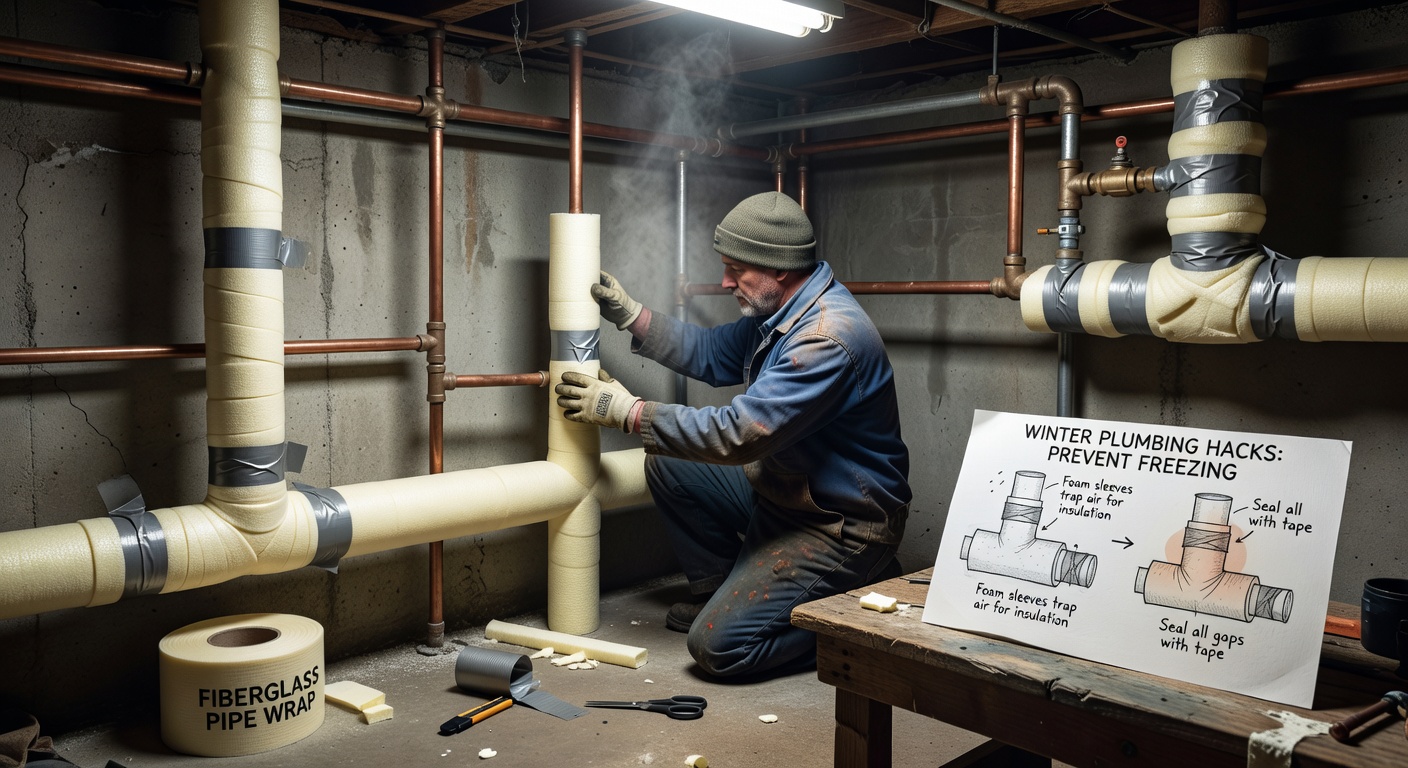
1Insulate Exposed Pipes with Foam Pipe Lagging Foam pipe lagging (also called pipe insulation sleeves) is an inexpensive and highly effective way to protect exposed pipes. It is available in various internal diameters to fit standard pipe sizes. Simply cut the sleeve to length with a knife or scissors, slit it along its length if not already pre-slit, and push it over the pipe. Secure the joins with insulating tape. Pay particular attention to pipes in the loft, garage, and any section of pipe that runs along an exterior wall.
-
2Drain and Disconnect Outdoor Taps Before Winter Outdoor garden taps are among the most vulnerable pipes in any home. Before the first frost, turn off the water supply to the outdoor tap using its isolation valve (usually found on the pipe leading to it inside the house). Then open the outdoor tap fully to allow any remaining water in the pipe to drain out. Leave the tap in the open position. Fit an insulating outdoor tap cover — a simple padded cap that attaches over the tap — for added protection. If you have garden hoses, disconnect them from the tap and drain them as well before storage.
-
3Keep Cabinet Doors Open on Cold Nights Under-sink pipes on exterior walls are particularly vulnerable during spells of very cold weather because the cabinet doors trap cold air and prevent heat from the room reaching the pipes. On nights when temperatures are forecast to drop well below freezing, simply leave the cabinet doors under the kitchen and bathroom sinks open. This allows the warmer air from the room to circulate around the pipes and significantly reduces the risk of freezing.
-
4Leave a Trickle of Water Running in Extreme Cold Moving water is much harder to freeze than standing water. During periods of extreme cold — particularly overnight when heating may be reduced — allow a slow, steady trickle from one tap on each side of the house. This keeps water moving through the pipes and relieves any pressure that might build up if a section does begin to freeze. Use the cold water tap, as the water in the cold supply pipe is what is most at risk. The water used is minimal and far less costly than repairing a burst pipe.
-
5Know Where Your Main Stopcock Is Every household member should know the location of the main stopcock (the main water shut-off valve), which allows the water supply to the entire property to be turned off quickly in an emergency. In most homes it is located under the kitchen sink, in an airing cupboard, or in a utility room. Test it periodically by turning it clockwise — it should move freely. If it is stiff, apply a small amount of plumber's silicone grease. In an emergency, being able to locate and close this valve within seconds can prevent hundreds of litres of flood damage.
-
6What to Do If a Pipe Does Freeze If you turn on a tap and find little or no water flow in cold weather, a pipe may be frozen. Turn off the main stopcock immediately. Then gently apply heat to the suspected frozen section using a hot water bottle, a warm damp towel, or a hairdryer on a low setting — working from the tap end back towards the supply, not from the middle of the frozen section. Never use an open flame, a blowtorch, or a high-powered heat gun to thaw a frozen pipe. The rapid, uneven heat can cause the pipe to crack, and near wooden joists or insulation, it creates a serious fire risk.
Hard Water and Winter — An Added Complication
In areas with hard water, winter can compound plumbing problems in another way: limescale deposits that have built up inside pipes over time can narrow the effective diameter of the pipe, increasing the risk that a partial freeze will cause a full blockage. Regular descaling of showerheads, taps, and kettles reduces mineral build-up. For the pipes themselves, a whole-house water softener can reduce limescale accumulation in the long term, though this is a more significant investment.
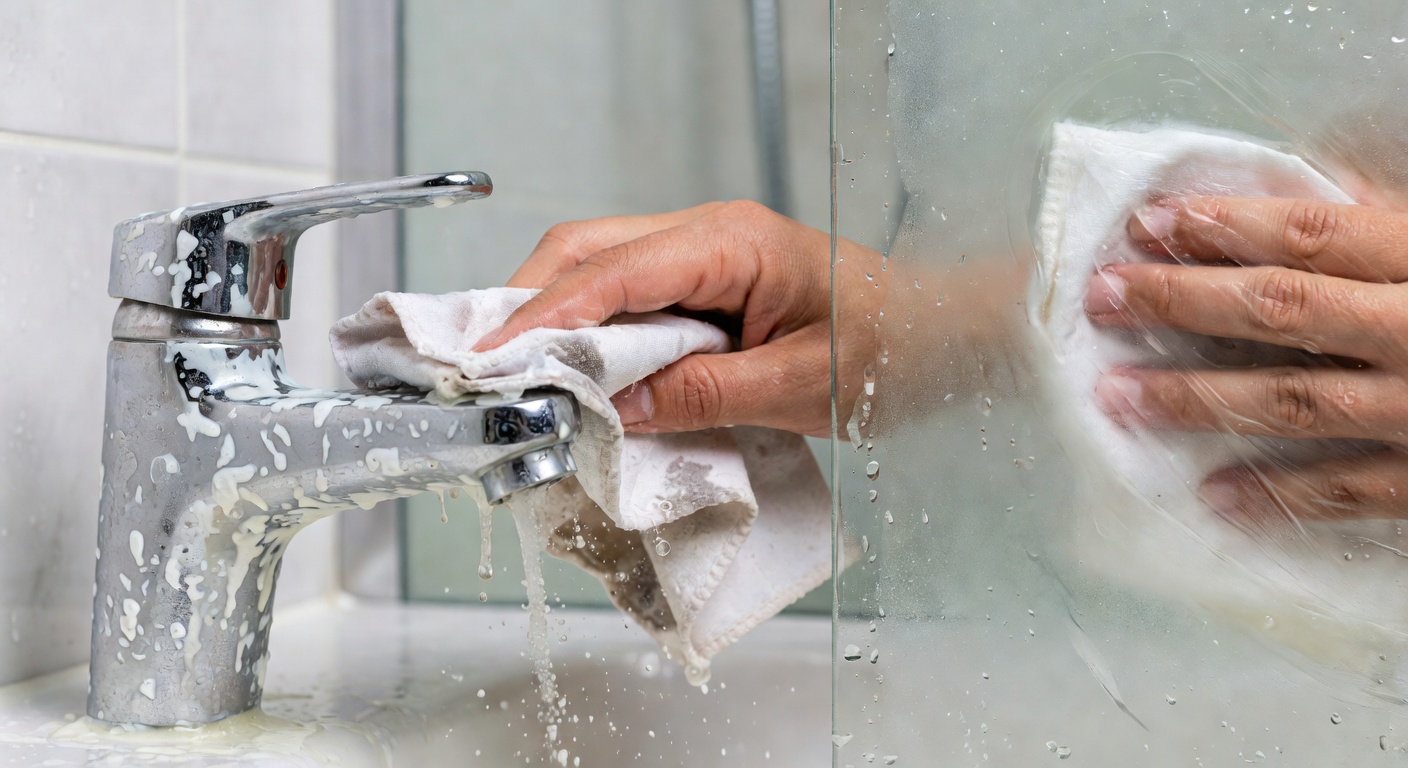
Hard water stains on taps, sinks, and shower surfaces are best addressed with white vinegar or a commercial descaling product. These are entirely separate from the freeze-risk issue but are worth managing year-round to keep your plumbing in good condition.
If You Are Going Away in Winter
If your home will be empty for more than a few days during cold weather, do not switch your heating off entirely. Keep it on a low setting (around 12–15°C) to ensure pipes in the property do not drop below freezing. If you will be away for an extended period and cannot maintain heating, consider draining the entire water system before you leave — this involves turning off the main stopcock and opening all taps until the system is empty. This is the most reliable protection against frozen and burst pipes in an unoccupied property.
After a freeze, watch for these warning signs: unexplained damp patches on walls, ceilings, or floors; discoloured water from taps; significantly reduced water pressure; the sound of running water when all taps are closed; a sudden rise in your water meter reading. If you suspect a burst pipe, turn off the main stopcock immediately and contact a licensed plumber. Do not attempt to repair a burst pipe yourself if you are unsure of the procedure — incorrect repairs can fail again and cause further damage.