Major household appliances work harder and last longer when they are kept clean. Beyond the hygiene benefits, a clean dishwasher washes more effectively, a clean refrigerator maintains temperature more efficiently, and a clean washing machine produces fresher laundry. This guide covers deep cleaning routines for the three most commonly neglected appliances: the dishwasher, the refrigerator, and the washing machine.
Dishwasher Deep Clean
A dishwasher that is not cleaned regularly will gradually develop a build-up of food debris, grease, and mineral deposits. This build-up can reduce cleaning effectiveness, cause unpleasant odours, and eventually block the spray arms or filter. A full deep clean takes about 30–40 minutes of active work plus the time for a hot wash cycle to run.
-
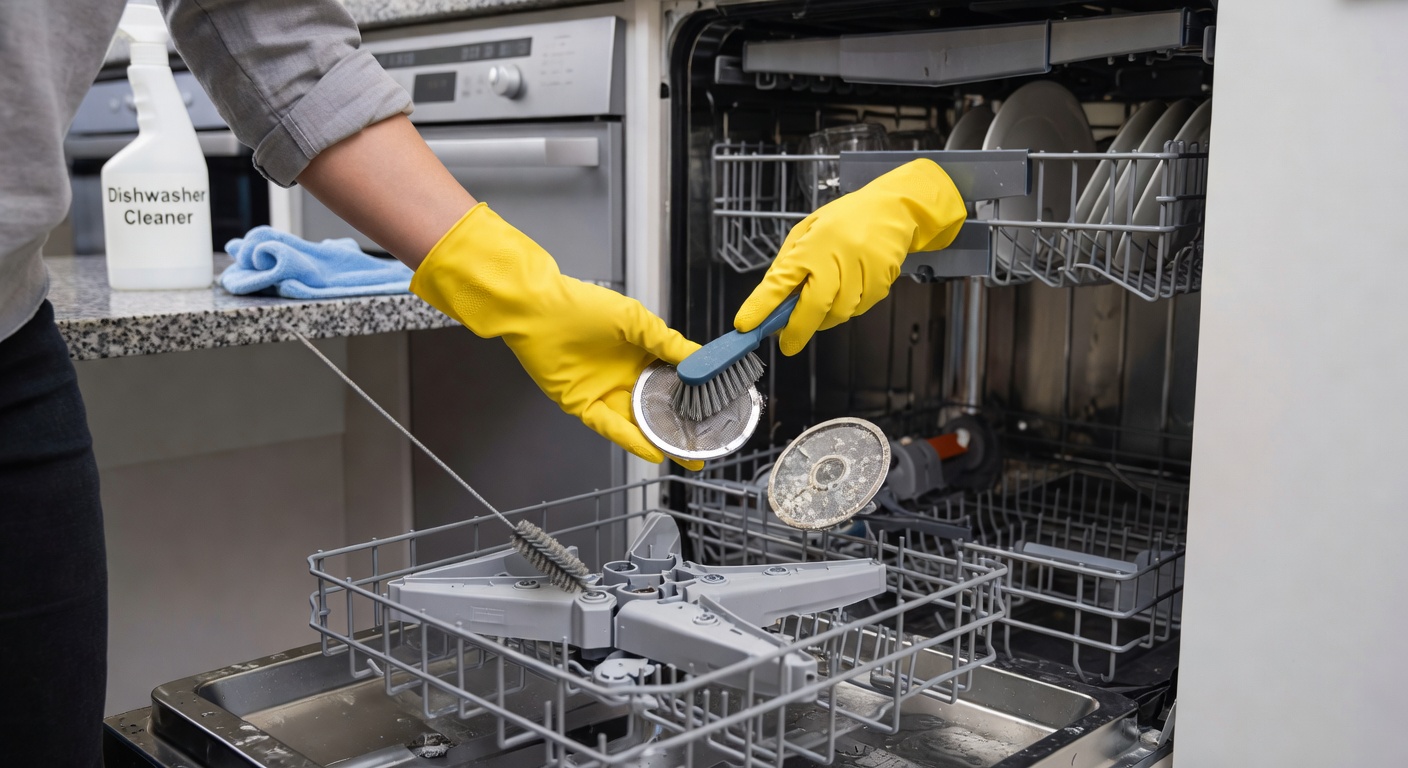
1Remove and Clean the Filter Locate the filter at the bottom of the dishwasher interior — it is usually a cylindrical mesh filter that twists out. Remove it and rinse under running water, using a soft brush to dislodge any trapped food particles. For a more thorough clean, soak the filter in warm water with a little dish soap for 10 minutes, then scrub and rinse. Replace the filter correctly — it should sit flush and twist securely into position. A blocked filter is one of the most common reasons for a dishwasher that leaves dishes dirty or greasy.
-
2Run a Hot Cycle with White Vinegar Place a dishwasher-safe cup or bowl filled with 240ml of white vinegar on the top rack of an otherwise empty dishwasher. Run a full hot cycle. The vinegar helps dissolve mineral deposits, break down grease, and deodorise the interior. Do not add vinegar to the detergent dispenser — placing it in a cup on the rack allows it to disperse gradually throughout the cycle for best results.
-
3Clean the Spray Arms Remove the spray arms (they usually unclip or unscrew from the centre) and hold them under running water. Use a toothpick or a thin wire to clear any blocked spray holes. Mineral deposits can accumulate in the holes over time, reducing spray coverage and cleaning effectiveness. Rinse thoroughly and reattach securely.
-
4Wipe the Door Seal and Edges The rubber door gasket and the inner edge of the door — the area not reached by the spray during a cycle — accumulate grime, mould spots, and residue. Use a damp cloth with a little dish soap or a diluted vinegar solution to wipe along all folds and crevices of the door seal. An old toothbrush helps reach into the seal folds. Wipe down the inner face of the door and the detergent dispenser compartment.
-
5Freshen with Baking Soda After the vinegar cycle has finished and the interior is dry, sprinkle a cup of baking soda across the base of the empty dishwasher. Run a short hot cycle. This neutralises any remaining odours and leaves the interior fresh. This optional step is particularly useful if the dishwasher has developed a persistent unpleasant smell despite regular use.
Refrigerator Deep Clean
Refrigerators should be deep cleaned every three to six months. A clean refrigerator is more hygienic, smells better, and — because clean coils and seals allow the appliance to maintain temperature more efficiently — may use slightly less energy. Clear a few hours for a full deep clean, as the food needs to be temporarily moved out.
-
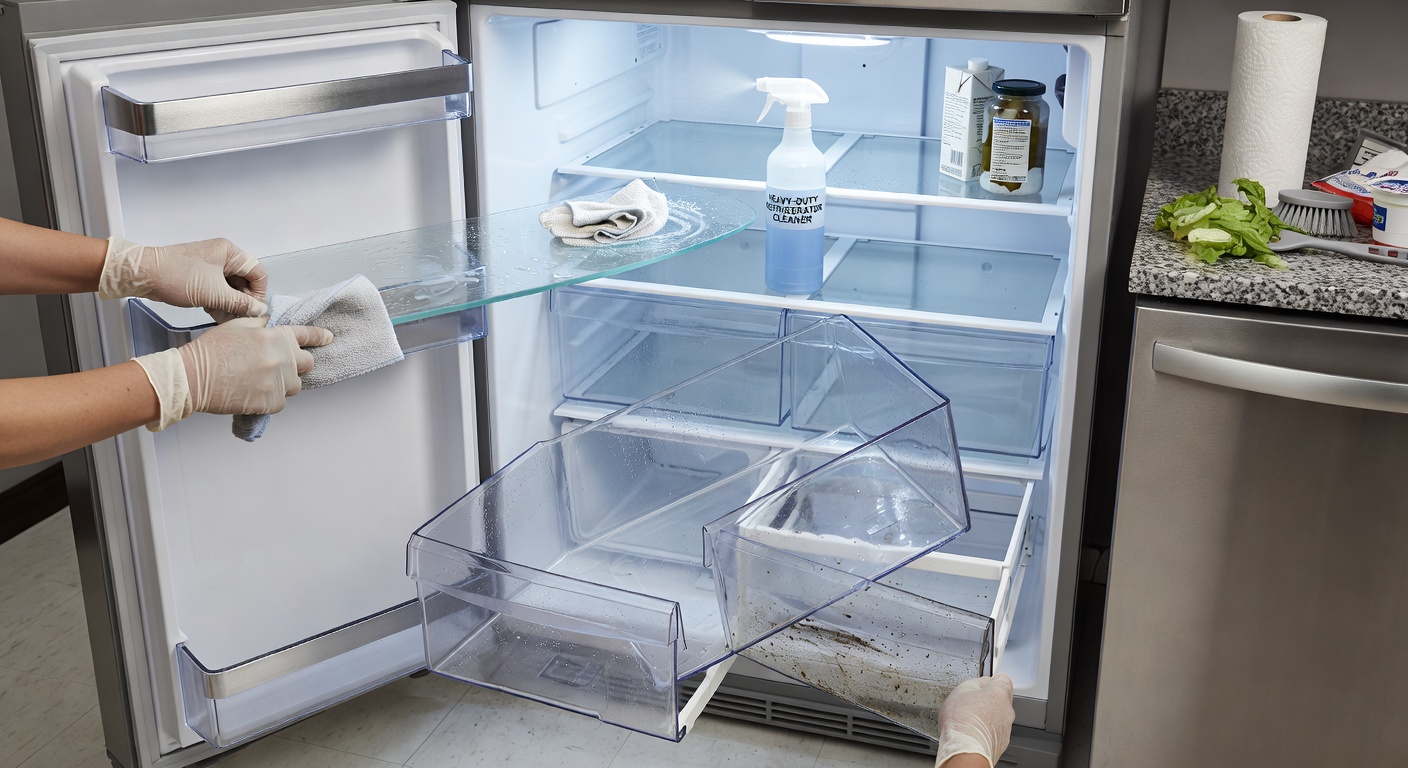
1Empty and Remove Shelves and Drawers Remove all food from the refrigerator and freezer compartments. Transfer perishables to a cool bag or box. Remove all shelves, drawers, and door bins — almost all are designed to be removable. Wash these in the sink with warm water and dish soap, or place them in the dishwasher if they are dishwasher safe (check the manufacturer's guidance). Allow to dry completely before replacing.
-
2Wipe Interior Walls and Base Using a solution of warm water and a few drops of dish soap, wipe all interior walls, the ceiling, and the base of the fridge compartment. For stubborn sticky spots, a paste of baking soda and water left for a few minutes will lift the residue. Avoid using strong chemical cleaners inside a refrigerator — residues can contaminate food. Rinse with a clean damp cloth and dry thoroughly.
-
3Clean Door Seals with a Toothbrush The refrigerator door seals (gaskets) accumulate food residue, moisture, and mould in their folds. Use a small brush — an old toothbrush is ideal — dipped in a solution of warm water and bicarbonate of soda to work into all folds of the seal. Rinse and dry thoroughly. Damaged or brittle seals that no longer form a proper seal should be replaced — a poor seal causes the compressor to work harder and raises running costs.
-
4Defrost the Freezer if Manual Defrost If your freezer requires manual defrosting (indicated by a significant build-up of ice on the interior walls), empty it, place towels around the base to catch water, and allow it to defrost at room temperature with the door open. Do not use sharp instruments to chip at ice as this can damage the freezer lining and refrigerant lines. Once defrosted, wipe the interior dry and return food once the freezer has reached its operating temperature.
-
5Deodorise with Baking Soda Place an open box or small open container of baking soda at the back of the main fridge compartment. Baking soda absorbs odours passively and effectively. Replace it every one to three months. This is particularly useful if the fridge has developed a persistent smell despite being clean — certain foods (fish, strong cheeses, onions) can leave lingering odours that baking soda helps to neutralise.
Washing Machine Deep Clean
Washing machines can develop unpleasant odours from a combination of residual detergent, fabric softener, and the warm, damp environment inside the drum. Front-loading machines are particularly susceptible to this problem. A monthly maintenance wash and a deeper periodic clean prevents these issues from developing.
-
1Run a Hot Empty Cycle with White Vinegar Add 500ml of white vinegar directly to the drum (not the detergent drawer). Select the hottest and longest wash cycle available — typically a cotton 90°C programme. Run the cycle with nothing in the drum. The hot water and vinegar combination dissolves soap residue, removes mineral deposits from the drum and internal components, and kills odour-causing bacteria. Do not add any laundry detergent or fabric softener to this cycle.
-
2Clean the Detergent Drawer Remove the detergent drawer completely (pull it out as far as it goes and press the release tab to remove it fully). Soak in warm water and scrub with an old toothbrush to remove the blue or grey build-up of detergent residue and mould. Rinse thoroughly and leave to dry. Also clean inside the drawer housing in the machine — use a cloth or brush to wipe away residue and mould from the cavity.
-
3Wipe the Drum and Door Seal After the hot cycle, wipe inside the drum with a clean dry cloth. Pay close attention to the rubber door gasket on front-loading machines — this is the area most prone to mould growth. Pull back the gasket folds and wipe inside with a cloth dampened with a diluted white vinegar or bicarbonate of soda solution. For visible black mould spots, apply a little hydrogen peroxide solution with an old toothbrush, leave for 10 minutes, then wipe clean.
-
4Check and Clean the Filter Most front-loading washing machines have a filter at the bottom front of the machine (behind a small access panel). Place a shallow tray beneath the filter cap before opening it — water will drain out. Remove any lint, coins, or debris from the filter. Rinse the filter under running water and refit securely. A blocked filter can affect drainage and cause error codes on the machine's display.
-
5Leave the Door Open Between Washes After every wash, leave the drum door slightly ajar and pull the detergent drawer out partway. This allows air to circulate through the drum and prevents the warm, damp environment that mould and bacteria thrive in. This simple habit, combined with a monthly maintenance wash, is the most effective long-term way to keep a washing machine smelling fresh.
| Appliance | Filter / Maintenance | Full Deep Clean |
|---|---|---|
| Dishwasher | Filter: monthly | Every 1–3 months |
| Refrigerator | Seals: monthly wipe | Every 3–6 months |
| Washing machine | Maintenance wash: monthly | Every 3 months |