The kitchen sees more daily use than almost any other room in the home, and with heavy use comes a particular kind of grime: baked-on grease in the oven, discoloured grout between tiles, sticky residue on cabinet doors, and a sink that carries the odours and bacteria of everything that has passed through it. A thorough kitchen deep clean, done once every few months, restores the room to a genuinely hygienic state and makes daily maintenance much easier.
Six Steps to a Complete Kitchen Deep Clean
-
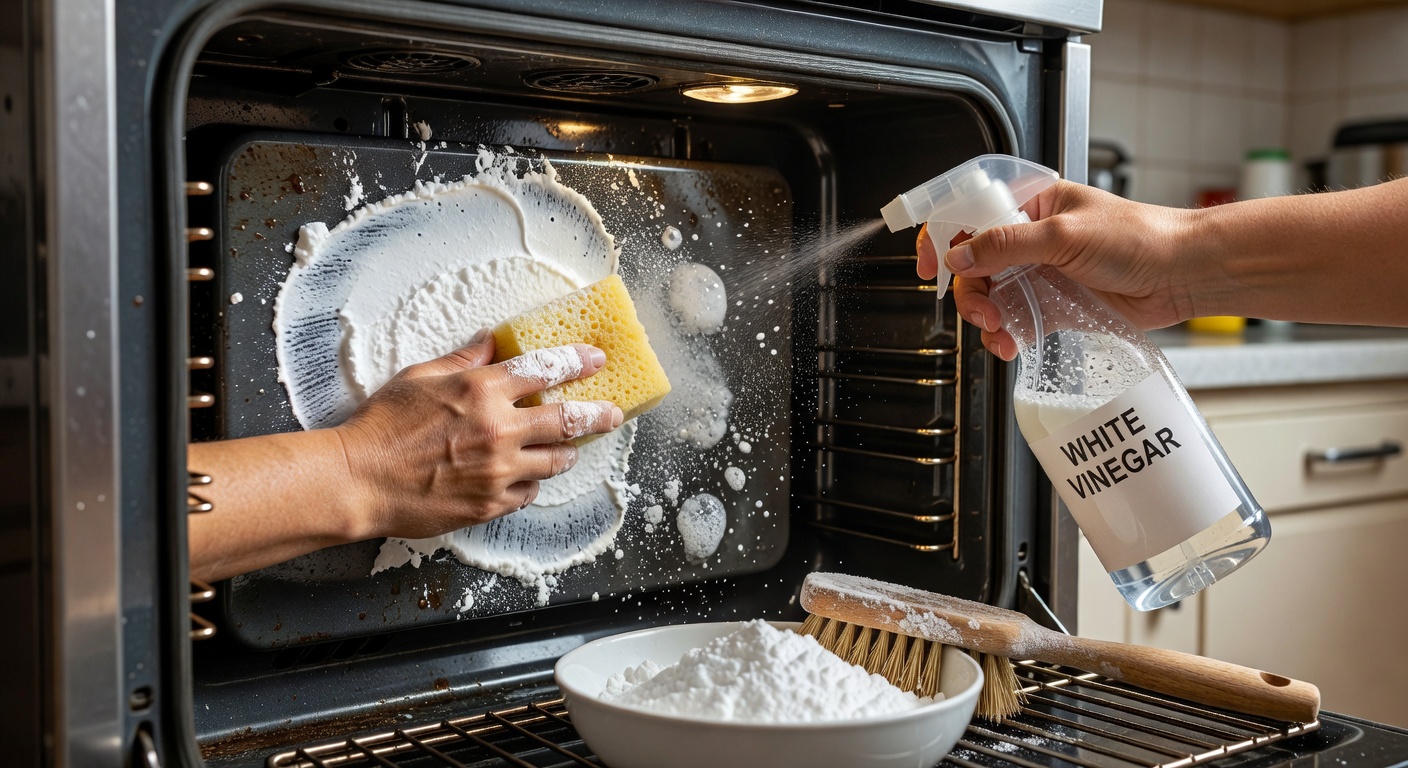
1Clean the Oven with Baking Soda Paste (Overnight Method) Mix a paste of approximately 120g of baking soda with enough water to create a spreadable consistency — roughly 2–3 tablespoons. Remove the oven racks (these will be cleaned separately). Wearing rubber gloves, spread the baking soda paste over all interior surfaces of the oven, avoiding the heating elements. Apply a thicker layer to areas with heavy grease build-up. Close the oven door and leave the paste to work overnight — a minimum of 8 hours, ideally 12. The following morning, use a damp cloth to wipe away the paste, which will have turned brown as it absorbed the grease. For stubborn spots, spritz with a little white vinegar — it will react with any remaining baking soda and help loosen the residue. For the oven racks, soak them overnight in a bathtub filled with hot water and a few squirts of dish soap, then scrub with a stiff brush before rinsing.
-
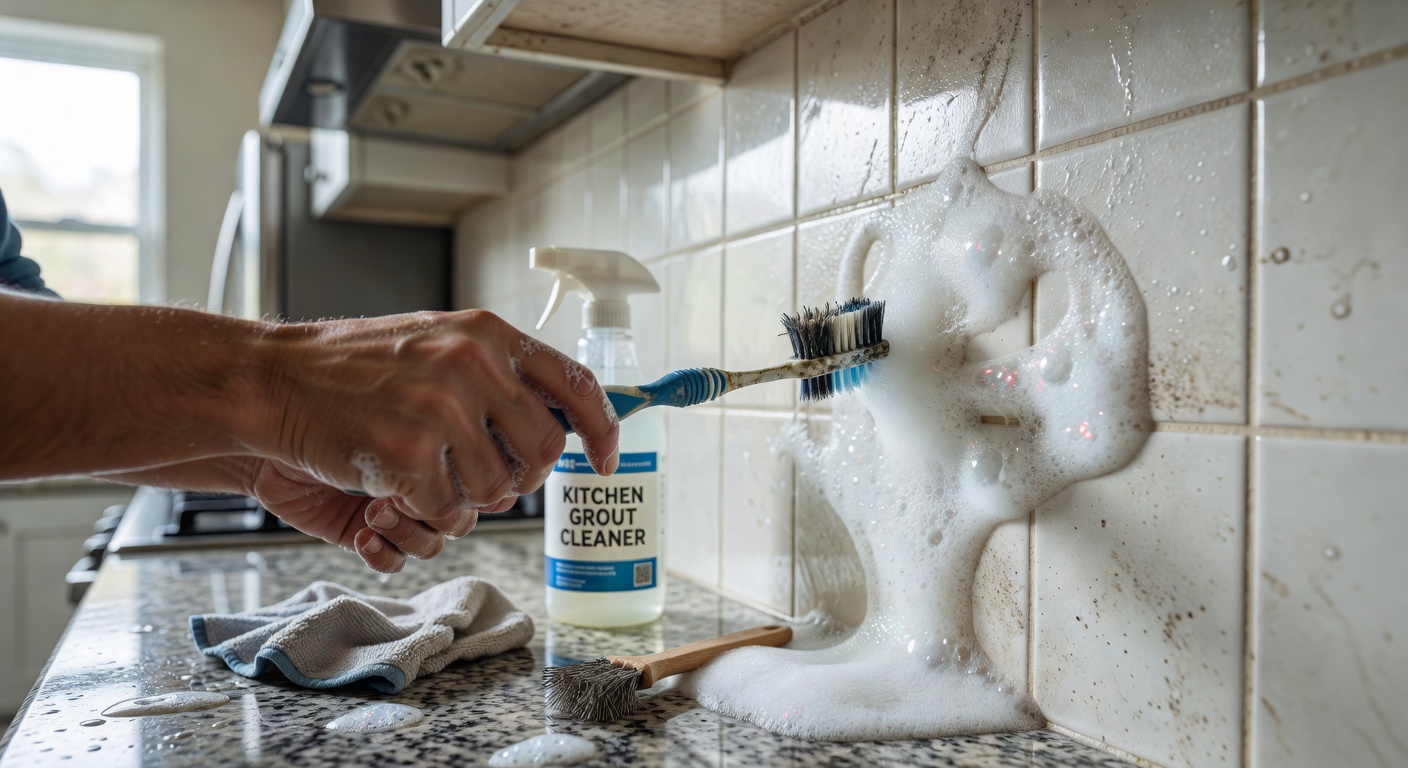
2Clean Grout with Baking Soda and Hydrogen Peroxide Kitchen grout, especially around the hob and sink area, discolours quickly from steam, grease, and food splashes. Make a thick paste by mixing baking soda with enough 3% hydrogen peroxide solution (available from pharmacies) to achieve a spreadable consistency. Apply the paste generously along each grout line using an old toothbrush, a grout brush, or a small spatula. Leave for 10–15 minutes. Scrub firmly along the grout lines with a stiff brush, then rinse with warm water. For heavily discoloured grout, repeat the process, or try a dedicated grout cleaner pen for precision application in narrow joints. Finish by wiping the tiles down with a clean damp cloth and drying to prevent streaks.
-
3Degrease Kitchen Cabinets Cabinet doors and handles accumulate a film of grease and fingerprints that is often invisible until light catches it at an angle. Mix a solution of one part white vinegar to four parts warm water, with a small squirt of dish soap. Apply this with a microfibre cloth, working in sections. The dish soap cuts through grease while the vinegar tackles residue and deodorises. For particularly sticky build-up, a diluted solution of washing soda (sodium carbonate) is more alkaline than baking soda and works well on stubborn kitchen grease. Always test any cleaning solution on an inconspicuous area of the cabinet surface first, especially with painted, lacquered, or wood veneer finishes.
-
4Clean the Kitchen Sink and Garbage Disposal Sprinkle baking soda over the entire sink basin and scrub with a damp cloth or sponge. Pay attention to the area around the plug hole and the overflow port. Rinse thoroughly. For stainless steel sinks, wipe in the direction of the grain to avoid visible scratching. To freshen a garbage disposal, drop in a few ice cubes and a handful of coarse salt, then run the disposal — this scrubs the interior walls. Follow by running cold water and dropping in half a lemon or a few drops of lemon juice to deodorise. For a deep clean of the disposal blades, use a dedicated disposal cleaning brush or a small bottle brush to reach inside.
-
5Clean and Freshen Refrigerator Seals The rubber door seals (gaskets) on refrigerators and freezers are a breeding ground for mould and bacteria because they stay damp and are often overlooked during regular cleaning. Use a solution of warm water with a small amount of bicarbonate of soda, and work it into the folds of the seal using an old toothbrush. Wipe clean with a damp cloth. For any visible mould spots, apply a small amount of white vinegar directly to the seal and leave for 10 minutes before scrubbing and rinsing. To prevent mould from returning, dry the seals thoroughly after cleaning and occasionally apply a very thin smear of petroleum jelly along the seal to keep the rubber supple and reduce moisture build-up.
-
6Tackle the Hob, Extractor Hood and Filters Gas hob grates and electric hob rings can be removed and soaked in hot water with dish soap. For the area around the burners, use a baking soda paste and an old toothbrush for precision cleaning. For glass-top hobs, a ceramic hob scraper followed by a dedicated ceramic hob cleaner prevents surface scratching. The extractor hood filter — typically an aluminium mesh — should be soaked in hot water with a strong degreaser or a dishwasher tablet dissolved in the water. After 15 minutes, most of the accumulated grease will rinse away. Allow the filter to dry completely before replacing.
Natural vs. Commercial Cleaning Methods for the Oven
| Method | Effectiveness | Ease of Use | Notes |
|---|---|---|---|
| Baking soda paste (overnight) | Good — works well on moderate build-up | Easy, minimal effort | Requires overnight wait; safe and odour-free |
| Commercial oven cleaner spray | Very good — dissolves heavy grease quickly | Moderate — requires protective gloves and ventilation | Strong fumes; keep windows open; follow label instructions |
| Self-cleaning oven function | Good — burns residue to ash | Very easy — automated | High heat generates fumes; remove racks before running; ventilate well |
| Steam oven function | Moderate — loosens light residue | Easy | Best for light build-up; combine with a wipe-down after |
| Vinegar spray alone | Light — surface-level cleaning only | Very easy | Best used to rinse after baking soda paste treatment |
Bleach (sodium hypochlorite) and white vinegar should never be mixed or used in the same area without rinsing thoroughly between applications. When combined, they produce chlorine gas, which is harmful if inhaled and particularly dangerous in an enclosed space like a kitchen. If you use a bleach-based cleaner on the sink or surfaces, rinse thoroughly with water before using any vinegar-based product. The same applies to bleach and other acids, such as lemon juice or hydrogen peroxide.
Maintaining a Cleaner Kitchen Day-to-Day
The most effective way to reduce the frequency of deep cleans is to develop habits that prevent build-up in the first place. Wipe down the hob after every cooking session, before grease has a chance to bake on. Rinse the sink after each use. Clean up any food spills inside the oven as soon as the oven has cooled. Keep the extractor hood running while cooking and for a few minutes afterwards to remove steam and airborne grease particles before they settle on surfaces.
A kitchen that receives 10 minutes of focused attention each day rarely needs more than an hour for a full deep clean. A kitchen that is neglected for weeks may require a full half-day to restore to a genuinely clean state.